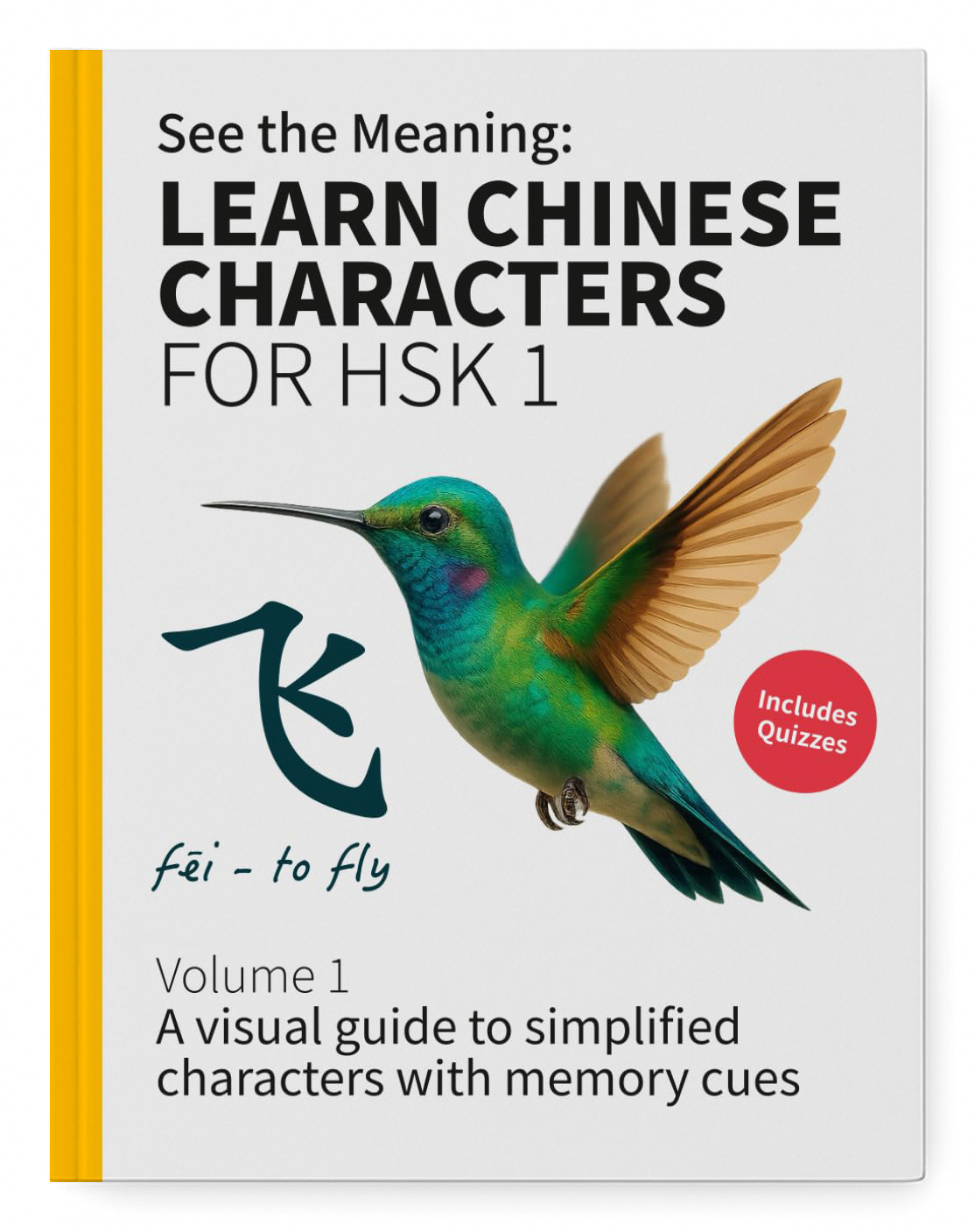
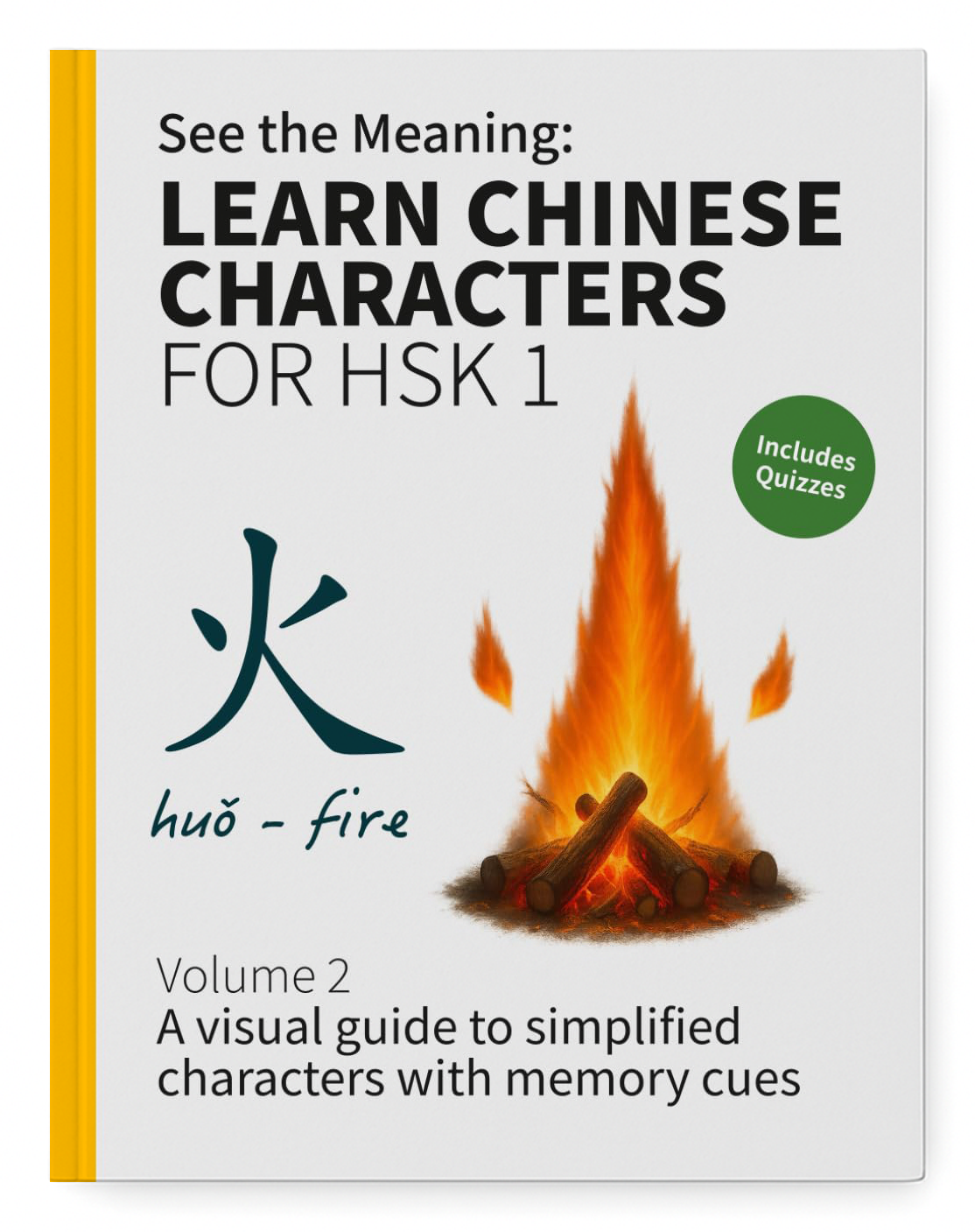
Start here · Primary sample
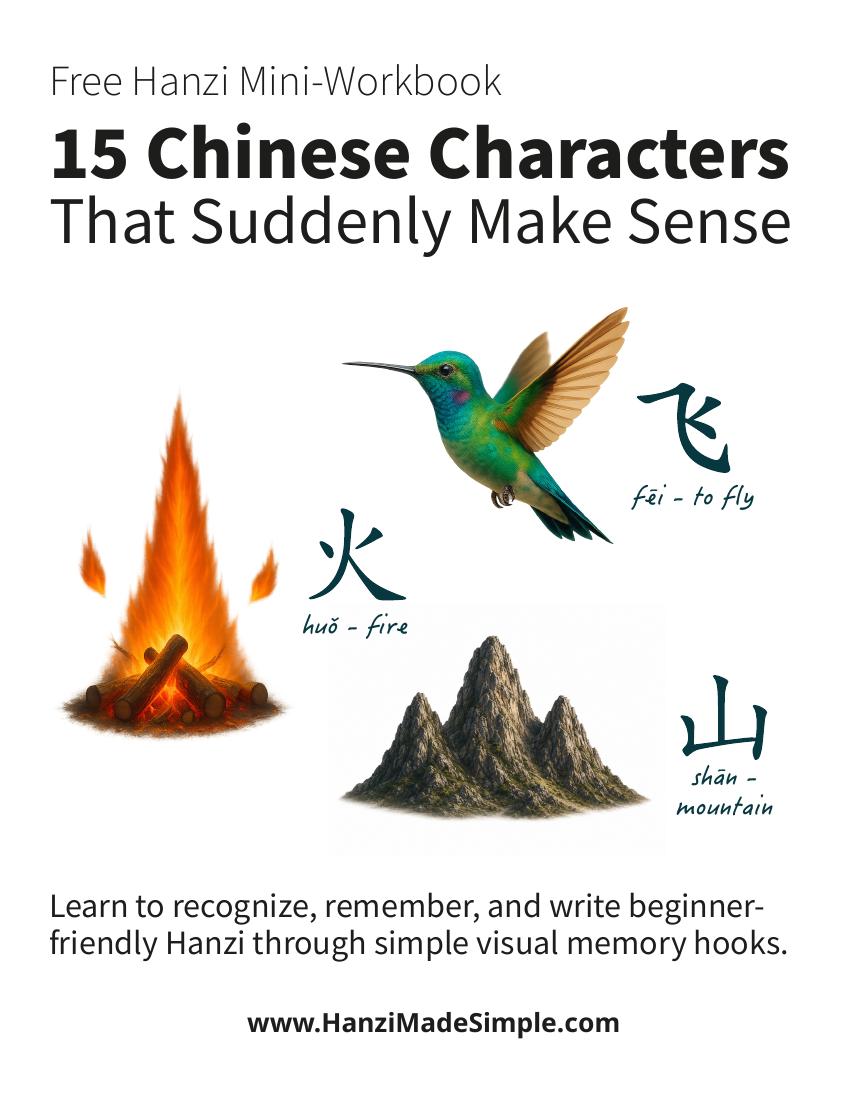
Memory Hook Sample Pages
Preview selected HSK 1 characters with components, stories, meanings, and writing practice.
- Selected HSK 1 characters
- Components and memory stories
- Writing practice grids
Memory Hooks · See the Meaning
Every character is built from simple parts — and each part means something.
Memory hooks turn each character into something you can see, picture, and remember — built from real components, short stories, and everyday HSK words.
(kǒu)
opening / box-like shape
(shù / gǔn)
vertical line
(zhōng / zhòng)
center / middle; to hit
A good memory hook connects the shape of a character with a simple story and a useful meaning.
Character
Start with the Hanzi, pinyin, and meaning.
Components
Break the character into visible parts.
Story
Turn the parts into a simple mental image.
Meaning
Connect the story to the meaning.
Vocabulary
See how the character appears in real HSK words.
Write
Reinforce the memory by writing the character.
Character → Components → Story → Meaning → Vocabulary → Writing
The method in one character
(shǒu)
hand
(mù)
eye
(kàn / kān)
to look / to see
A hand above the eyes helps you look into the distance.
(kǒu)
opening / box-like shape
(shù / gǔn)
vertical line
(zhōng / zhòng)
center / middle; to hit
"A vertical line goes right through the center."
Character
中(zhōng / zhòng)— center / middle; to hit
Components
口 (kǒu) — a box-like opening. 丨 (shù / gǔn) — a single vertical line. Together they form a line going through the center of a space.
Vocabulary

(shǒu)
hand
(mù)
eye
(kàn)
to look
Character
看(kàn / kān)— to look / to see / to examine
Components
龵 / 手 (shǒu) — hand · 目 (mù) — eye
Memory hook
A detective holds a magnifying glass steady with his hand while his eye focuses on the details. That is 看 (kàn): to look, see, or examine.
Vocabulary
Most beginner words use kàn. Some contexts use kān, for example “to guard” or “to look after.”
Once you know a component, you can recognize it again in new Hanzi.
Known component
(mén)
gate / door
Add component
(kǒu)
mouth
New character
(wèn)
to ask
Memory hook
“A mouth at the gate asks a question.”
门 (mén) means gate or door. Add 口 (kǒu), meaning mouth, and you get 问 (wèn): to ask.
This is the real benefit of memory hooks: you do not only remember one character — you start recognizing patterns in the next one.
Each character entry reads like an annotated workbook page — six fixed elements, in the same order, every time.
Character + Pinyin
Know how the character is written and pronounced.
Components + Radical
See the visible parts and the main radical.
Visual Memory Hook
Turn the shape into a mental image.
Story + Meaning
Connect the image to the meaning.
HSK Vocabulary
See how the character appears in real words.
Stroke Order + Writing Practice
Write the character step by step.
Download printable sample pages and worksheets to see how visual character learning works.
Start with the sample pages, then explore the supporting worksheets.
Start here · Primary sample
Preview selected HSK 1 characters with components, stories, meanings, and writing practice.
More Free Resources
Character Components Cheat Sheet
Free PDFCommon building blocks like 口 (kǒu) — mouth, 人 (rén) — person, 木 (mù) — tree, 目 (mù) — eye, 门 (mén) — gate, 日 (rì) — sun, 心 (xīn) — heart, and 水 (shuǐ) — water.
Literal Translation Sheet
Free PDFSee how everyday Chinese words break down into their literal meanings — often surprisingly direct and easy to remember.
Radical Cluster Mini Sheet
Free PDFSee how one radical appears across related characters.
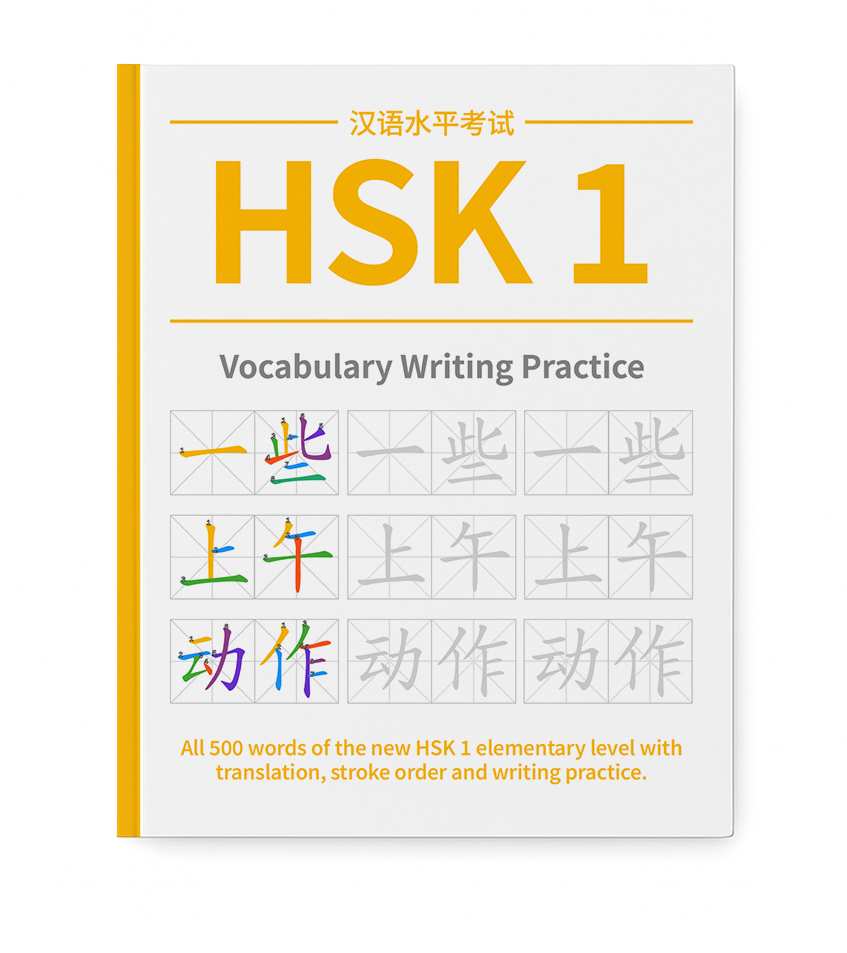
See the Meaning books help you understand and remember characters. HSK Writing Practice books help you write and repeat HSK vocabulary.
Primary · See the Meaning
Look
Look at the character.
Say
Say the pinyin and meaning out loud.
Identify components
Spot the visible parts inside the character.
Read the hook
Read the memory hook.
Connect story and meaning
Tie the image to the meaning.
Write
Write the character by hand.
Recall
Recall the hook without looking.
Memory hooks help you notice the structure. Writing practice helps the character stick.
Continue learning with structure